Children Get to Know You Sheet
As schools shut due to COVID-19 concerns and new guidelines on social distancing take result, many parents are home with their young children—and looking for new ways to keep them occupied while building on the skills they've been learning in the classroom. Keeping kids engaged and active (without overusing screens!) can exist tough during an unexpected suspension similar this, specially when new safety recommendations put a temporary hold on play dates, eatery trips, and visits to crowded parks, zoos, and other places kids honey.
If you lot're a parent of immature children—or if you work with families—today's post is tailored peculiarly for you lot. We're bringing y'all a drove of 24 at-home learning activities parents tin use to boost their kid'south bookish, motor, communication, and social-emotional skills while they're home from school. Adapted from some of our best books on early childhood development and education, these fun and cheap activities will go along kids learning and give yous like shooting fish in a barrel ways to connect with them during this unexpected pause in routine.
Please share these ideas with whatever families who might do good, and if y'all have a favorite at-home activeness to share, add together it in the comments below!
Academic skills
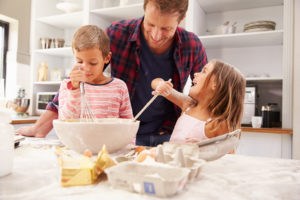 Give mealtime a math infusion. Do your kids like to help out in the kitchen? Meal prep is the perfect time to go children counting, measuring, estimating, comparison, and recognizing shapes. Ask your child to measure and count cups of ingredients, count how many plates and utensils are needed for the whole family, and figure out who has more than or less mashed potatoes. Get artistic with math during cleanup time, besides: you tin can have your child name the shapes of the dishes and sponges, count the number of steps they took to complete the cleanup task, and predict how many dishes will fit in the dishwasher. (Want more ideas? Download this free tip sheet for 24 means to have fun with math at home.)
Supercharge your storytimes. Your daily book reading sessions are golden opportunities to actively build early on literacy skills. To heave vocabulary cognition, watch for words you think your child may not know and briefly define and talk about them. When y'all reread a book, inquire your child if they remember what the word means, and try to employ the new words at other times of the twenty-four hour period to reinforce noesis. To build letter recognition skills, attempt pointing to letters as you lot say their names, singing a slowed-down ABC vocal while you point to each letter in the book. Turn to random pages in the book and come across if children tin can proper noun and bespeak to the letters themselves. You can follow upwards by having your kid make their own ABC book, finding or drawing pictures for each letter.
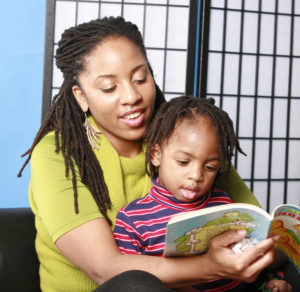 Reread all your child's comfort books . At times like these, when you're home together and it seems like life is slowing down, sink into some comfort rereads of favorite moving-picture show books. Kids love hearing the same book many times, and the repetition is actually benign to their developing literacy skills, since information technology gives them multiple chances to blot the language of the volume. If you desire to make the most of repeated readings, cull high-quality books with words that stretch your child'south vocabulary and language knowledge.
Make a museum. Your child'southward favorite museum might be closed to the public right now, simply they tin brand one at dwelling house with a piffling imagination and a few simple materials. If your child has nerveless lilliputian treasures over the years (rocks, shells, toy dinosaurs, buttons, etc.), show them how to adapt their collections in themed displays using shoe boxes, small jars, or egg cartons. Assist children label their treasures—a slap-up way to do letter writing and recognition—and build their language skills by encouraging them to requite "tours" of their personal museum to visitors. (Likewise, did you lot know that many museums are giving free virtual tours right now? Hither'due south a list of them, and here's a link to the kid-friendly online tour of the Metropolitan Museum of Art. While you're teaching young children at home, a virtual museum tour might be a fun way to spark conversations about art and history.)
First a language-rich restaurant at home. If your family unit eats out regularly, kids might exist missing the interesting change in routine that a restaurant offers. Why not first a restaurant at abode, and employ it to help teach language and literacy skills? Stock your play area with empty boxes, food containers, and eatery props with writing on them, such as takeout menus, placemats, or a paper round. Read the menu with them, or help them create their own menus from scratch. Help kids make a sign with their eating place's name. As children play, betoken out words on the restaurant props and encourage them to spot familiar letters and words.
 Create a dedicated writing eye. To brand writing/prewriting activities inviting to young children, designate a table or desk as your abode'due south "writing center." Fill it with open-ended materials that invite exploration and experimentation. Offer kids blank paper in different colors, a small dry erase board, markers, crayons, pencils, pair of scissors, glue sticks, hole punches, and envelopes. Kids who have a diversity of materials on mitt will be more than probable to initiate self-directed writing projects.
Measure their masterworks. Are your kids passing the time by making a long cardboard route for their cars, or building a tall belfry with blocks? Dig out your ruler and incorporate a little measurement lesson into their play. Show them how to utilise the ruler to measure the length of their road or the pinnacle of their tower. They might have fun predicting how many inches long or feet high their creations are.
 Help math and scientific discipline skills blossom in your garden. If you're starting work on a garden, this is a perfect opportunity to teach math and science concepts while your kids get some much-needed fresh air. Have them measure water into a watering can, count seeds, offset tallying days on a agenda to go along rails of found growth, and record observations. (If you lot don't take a backyard, you tin can showtime a windowsill garden with kids. They tin can measure soil into small-scale pots, count and institute seeds, predict which seeds will sprout first, and make observations.)
Communication skills
Have an adventure—without leaving your living room. Sit with your kids on a carpet or burrow and pretend yous're leaving for a big adventure on a magic carpet, submarine, or school bus. Ask them to share their ideas on where they want to visit, and take turns concocting a story almost your adventure. Describe the sights you see and ask kids questions that invite their creative participation: "Expect, there's a circus! Can you see the elephants? What are they doing?" "Do yous see that schoolhouse of fish? What do you call up fish acquire about in school?" This is a nifty way to strengthen communication skills while having fun with kids who experience cooped up.
 Put on a play. Encourage your kids to collaborate on a brusque play using a few puppets. They tin adapt a familiar story or fairy tale, or create their own story together. After they put on the play, talk with them near the story and characters, and inquire them questions about how they developed the play.
Set upwards a dwelling office for kids. This is an indoor activity kids beloved, particularly if your ain home office is getting a workout right now—they'll relish the chance to be "just like you." Fix a pretend office in a corner of your domicile where kids tin make calls, write letters and "transport" them, and type important emails. Be sure to provide lots of varied materials for them to work with: an old keyboard to type with, file folders and paper, a calculator, an old phone (toy or real), pens and pencils, tape, envelopes, rubber stamps, and notepads. So pretend with them—give them a "call" and ask when the mail will be arriving, or inquire to have a face-to-face meeting in their function.
 Get-go your own store. If your kids are missing the chance to shop in stores with yous, open your own department store in your room or in their playroom. Encourage kids to play different roles—shopper, sales clerk, cashier—and communicate with each other in grapheme (or you can play one or more roles). This is an ideal activity to try if y'all've been doing spring cleaning; children can browse the items you lot're getting rid of and "buy" a few items with pretend money.
Accept some flashlight fun. This action can assist heave communication skills while easing your kid into bedtime. In one case your child is in bed, requite them a flashlight and play with it together in the darkened room. Accept turns shining the light on different things. Ask your child questions about the items in the room, and talk nigh what you lot meet. Whisper and express joy together, and make up a silly story. Bedtime chats similar these hone language skills while helping your child feel safe, secure, and at-home.
Motor skills
 Enjoy the outdoors. Communal playtimes at the park may not be possible right now, but you can all the same enjoy outdoor family unit activities that give your kid's motor skills a choice-me-upwards. Choose activities that involve both gross motor skills (running, jumping, playing take hold of, dribbling a ball) and fine motor skills (collecting and sorting objects, using pocket-sized tools). Continue a family walk and play "I Spy." Have an outdoor family dance party. Collect things like pinecones, acorns, and pretty stones in a pail, and help your child sort them into groups. Make and hang homemade feeders for your backyard or windowsill birds. Your kids will become disquisitional motor skills practice, and the fresh air and fun volition give anybody an emotional boost.
Open up your ain "art schoolhouse." Beginning by reading your child some favorite moving picture books and talking about the different techniques the artists used for the illustrations. And then have the kid practice fine motor skills by making books or illustrations of their own, using materials such as watercolors, paste, paper, cloth scraps, ribbon, foil, string, stamps, greeting cards, and box tops. When they're done, your kids tin can hang their masterpieces in a special gallery area or "read" their illustrated books to you or each other.
 Try some target practice. While there's a temporary hold on those family trips to Target, requite another kind of target a try. Cutting a few 8- to 9-inch holes in a big piece of cardboard, describe a target with chalk on a sidewalk or in your driveway, or pick a target outside, such as a tree, your garage door, or the side of your apartment edifice. Encourage your child to attempt to throw a beanbag or small-scale ball through the holes or at the target. Accept your child start very close to the target and and so motility back a few feet, and show them how to throw underhand and overhand. Be sure to cheer for them when they hitting the target.
Brand egg carton caterpillars. If you're shifting to at-abode cooking and using up lots of eggs, hither's a fun fine-motor activeness to do with those leftover paper-thin egg cartons. Cut the egg section of the cartons into strips, one for each child in your house. Accept each child choose a caterpillar body and decorate it with pigment or markers or by gluing on different colors or textures of newspaper. Piping cleaners make groovy antennae, and children may fifty-fifty want to add together some pipe cleaner legs to their caterpillar. Remind them to draw or glue on a face!
Outline an animal. Does your child accept a favorite animal? Depict a simple silhouette of the animal on a big piece of newspaper and requite your child some glue and a basin of Cheerios or uncooked pasta shapes. Then have the child outline the animal by gluing the cereal or pasta pieces to the page, following the lines y'all drew. (Always supervise carefully when children are working with small items that could be a choking hazard.)
Social-emotional skills
 Have regular emotional bank check-ins. During challenging times, immature children can easily option up on the stress and worry of the adults in their lives. Disruptions to regular schedules, troubling news stories, bans on social gatherings, and overheard adult conversations can get out a child confused and concerned about the hereafter. Set aside time to bank check in and connect with your child every twenty-four hour period. Talk most your day and what will happen tomorrow. Ask them simple questions: "What was the all-time part of today?" "Were at that place any hard parts?" "How did you feel?" "Exercise yous take anything y'all'd like to talk about?" Listen carefully to what your child says and so they know their thoughts and emotions are important to you. (For more social-emotional skill-boosters for children ages 2 months through 5 years, print these gratuitous ASQ:SE-ii activeness sheets . And for a helpful guide to answering children's questions about the coronavirus, see this resource from Cypher to Three .)
Pound some dough together. Mushing, squeezing, and pounding dough is a bang-up action for helping kids process feelings of acrimony, frustration, and helplessness (and housebound grownups might detect this just as therapeutic). Mix upwards some cookie dough (like these "Get the Mad Out" cookies on the PBS website) and mash and knead information technology together. Or if baking isn't your thing, let the kids smush and pound play dough or dirt. They'll let off steam in a rubber style and hone their creativity at the same time.
Encourage nurturing play. When the world feels scary, nurturing dolls and stuffed animals is a good way for children to refocus their feelings and practice caring behavior. Ready toy cribs where children can put their "babies" to bed, h2o tables where kids can bathe their dolls, and places where the babies can be fed with old bottles, sippy cups, and spoons. Help children create caregiving scenarios and praise children for their TLC. (Exist sure to include kids of all genders in this activity—every child tin benefit from practicing their caring skills.)
 Employ books as bibliotherapy. Book reading is one of the best ways to assist children deal with fears and worries in uncertain times. Select books that bargain with large changes and tough emotions and have reassuring endings. Hash out how the characters dealt with adversity, adjusted to a new situation, and managed their fears. Learning near characters who faced difficult situations and emerged triumphant can aid assure children that their family can make it through hard times, too.
Endeavor some therapeutic art, also. Art activities are more than merely fun—they tin provide children with a powerful outlet for their emotions. Alice Honig describes one case in her book Piffling Kids, Big Worries : "Lonnie drew a bus and so scribbled all over information technology with a brown marker. The instructor was puzzled. She did non act disappointed by his scribbles. She did enquire him gently to tell her about his motion picture. The child soberly explained, "That is the ambulance that took my dad to the hospital.' The brown scribbles over Lonnie'southward picture show expressed his dark scared feelings near his begetter's illness." Teach children how art tin can exist a healthy way to procedure difficult emotions, and provide them with lots of different materials they can use to express whatever they might be feeling: pages from magazines, photos, stickers, paint and markers in brilliant colors, etc.
 Share a story from faraway family unit members. Many children are finding it hard to be separated from their extended family unit members right now, including grandparents, aunts, uncles, cousins, and close family unit friends. Achieve out and ask a few beloved family members to record themselves reading your kid a story out loud. Your child can follow along in the book with them or just enjoy listening. This can exist a wonderfully reassuring feel during a time of stress and uncertainty.
Nosotros hope this post gave you some new ideas to try with kids, and we wish you and your loved ones continued expert health and safety. Stay tuned—subsequently this calendar week, we'll share a roundup of distance learning resources for K-12 educators who are now education remotely. Please allow us know how else the Inclusion Lab can support you in the weeks to come!
MORE FREE Resources
20 Stress-Busters for Young Children (designed for early childhood classrooms, only many of the activities can be adapted for dwelling utilise)
24 Ways to Have Fun with Math at Abode
Sample ASQ-3 Learning Activity Sheets
Sample ASQ:SE-2 Learning Activity Sheets
EXPLORE THE BOOKS
The activities in this mail service were adapted from and inspired past the post-obit books:
Activities ane and 8: Allow's Talk About Math by Donna Kotsopoulos and Joanne Lee
Activities ii and 3: Connecting Through Talk by David K. Dickinson & Ann B. Morse
Activities 2, 4, 9, 15, and 22: Talk to Me, Infant!by Betty Bardige
Activities five-7: Blended Practices for Educational activity Immature Children in Inclusive Settings, 2d Edition, by Jennifer Grisham-Brown, Mary Louise Hemmeter, and Kristie Pretti-Frontczak
Activities 10, xi, 14, and sixteen: ASQ®-3 Learning Activities by Elizabeth Twombly and Ginger Fink
Activities 12, 17, and 18: Early Literacy in Action by Betty H. Bunce
Activities 13, 19, and 24: ASQ®:SE-2 Learning Activities by Elizabeth Twombly, Leslie Munson, and Lois Pribble
Activities twenty,21, and 23: Little Kids, Big Worries past Alice Sterling Honig
.
Source: https://blog.brookespublishing.com/24-at-home-learning-activities-to-share-with-parents-of-young-children/

Post a Comment for "Children Get to Know You Sheet"